Featured
How to Unclog a Kitchen Sink Naturally and Fast
Learn how to unclog a kitchen sink using baking soda and vinegar in 6 easy steps. A safe, natural fix for grease and gunk, no harsh chemicals needed.
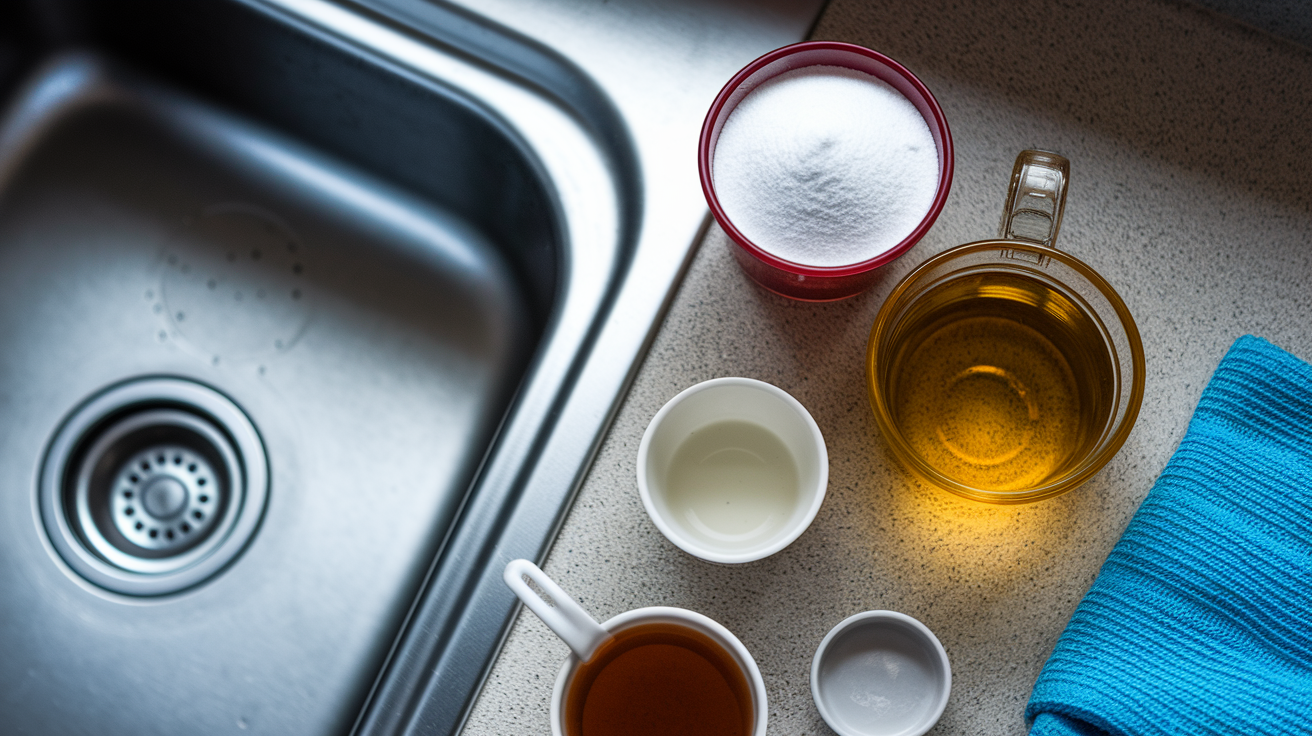
Stop. Don’t reach for a harsh chemical drain cleaner yet.
You can clear a slow or mildly clogged kitchen sink naturally and fast using one cup baking soda, one cup white distilled vinegar, and a hot-water flush.
This quick six-step fix gives the exact amounts, tools, safety checks (do not mix with bleach), and the order to follow so you don’t waste time or make the clog worse.
It’s great for grease, soap scum, and soft gunk, but won’t budge solid objects deep in the pipe.
Quick Six-Step Fix for a Blocked Sink Drain
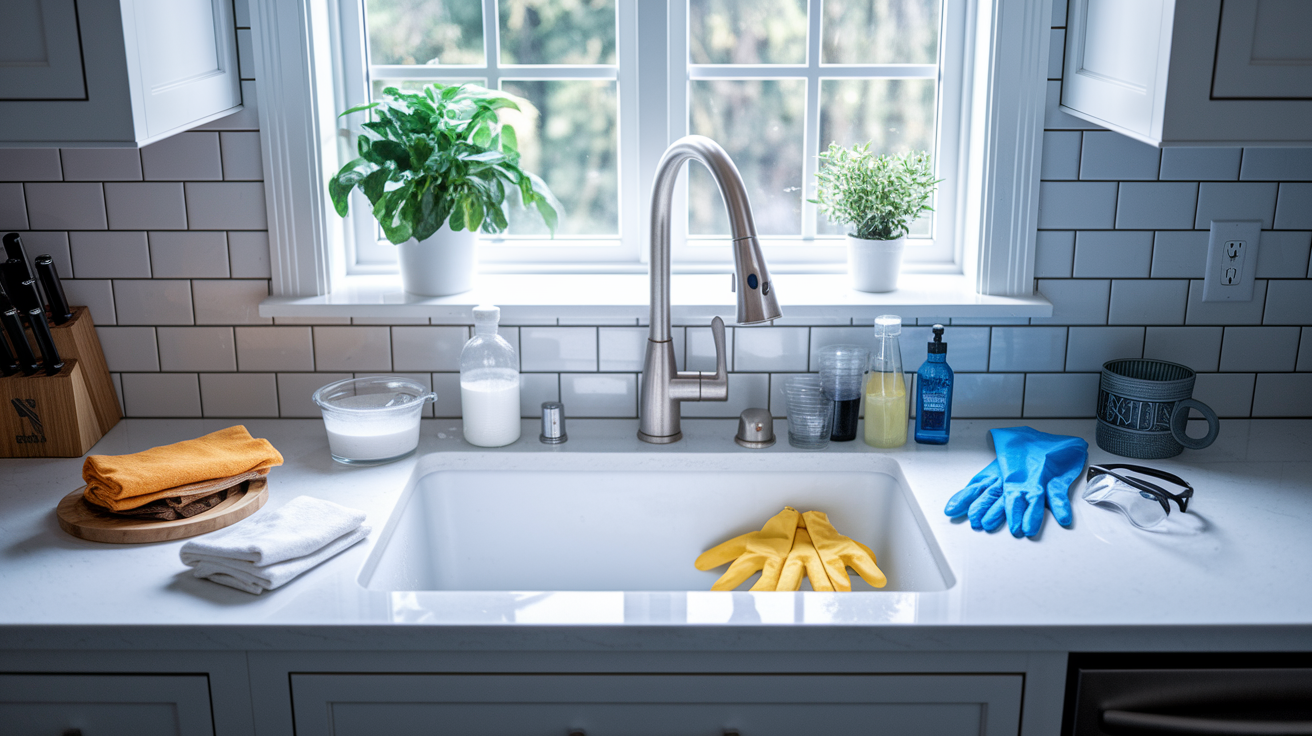
Before you touch the drain, grab everything you need. You don’t want to be digging through cabinets with wet hands halfway through the job. Here’s your checklist:
- 1 cup baking soda
- 1 cup white distilled vinegar
- 1 to 2 litres of very hot water
- Measuring cups
- A stopper or rag (to cover the drain opening)
- Gloves
- Eye protection
- A container or cup for removing standing water
Got all that? Good. Now here’s the sequence that actually works, instead of just making bubbles for fun.
-
Put on your gloves and eye protection, then clear out any standing water and visible debris from the sink. Scoop the water out with a cup or small container, and pull out any gunk you can see or reach by hand.
-
Measure 1 cup of baking soda and pour it straight down the drain opening. Try to get as much of it into the drain as you can instead of letting it sit on the sink surface.
-
Slowly add 1 cup of white distilled vinegar on top of the baking soda. Immediately cover the drain opening with your stopper or rag. This traps the fizzing reaction and pushes it down into the pipe instead of letting it escape up into your sink.
-
Leave the covered drain alone for 15 to 20 minutes. Don’t peek, don’t poke. Just let the baking soda and vinegar do their thing.
-
Uncover the drain and slowly flush it with 1 to 2 litres of very hot water. Here’s something worth knowing: boiling water can soften or damage some PVC plumbing, and it can even crack delicate sink materials like older porcelain. Unless you’re sure your pipes and sink can handle a full boil, stick with very hot tap water.
-
Turn on the hot tap and let it run for a bit to test whether normal flow has returned. This is your real moment of truth.
One safety note worth repeating. Never use this treatment alongside bleach or any commercial drain cleaner. Mixing drain products, even natural ones with leftover chemical residue, can create hazardous fumes you don’t want in your kitchen.
Quick reality check before you move on. Bubbling and fizzing only tell you the baking soda and vinegar ratio is reacting the way it should. That’s chemistry, not confirmation. The only thing that matters is whether water drains faster afterward. If flow is still slow, you can repeat the whole process one more time, but that’s the limit before switching to mechanical methods.
What the Baking Soda and Vinegar Reaction Can and Cannot Do
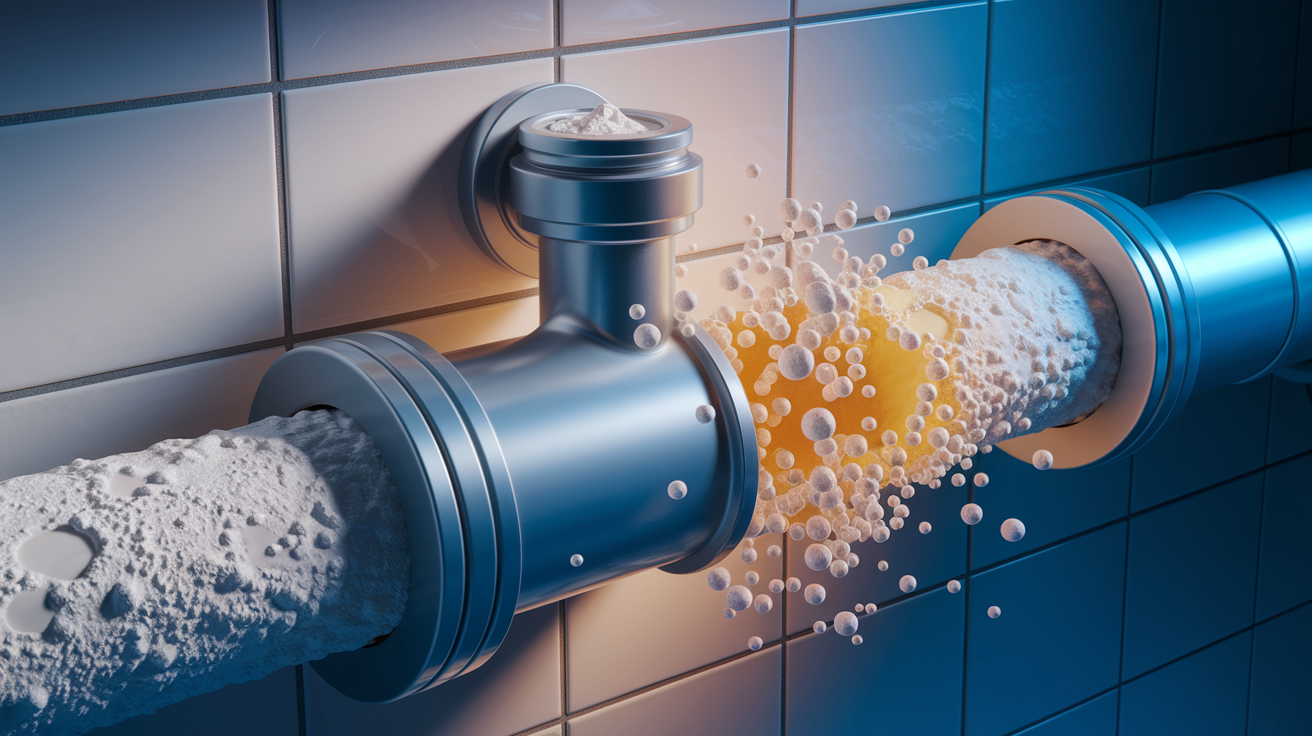
Baking soda, or sodium bicarbonate, is alkaline. Vinegar contains acetic acid. Combine the two and you get a reaction that produces carbon dioxide gas, water, and sodium acetate, which is exactly why you see all that fizzing and foaming the moment the vinegar hits the baking soda. That bubbling agitation can help loosen light grease, soap scum, and soft organic debris clinging to the inside of your pipe. The hot water flush that follows is what actually carries that loosened material down and away.
Here’s the part people often get wrong, though. Fizzing confirms a reaction is happening. It doesn’t confirm your clog is gone. Plenty of homeowners watch the bubbles, feel satisfied, and assume the job’s done. But this method has real limits. It won’t budge solid objects stuck in the pipe, it won’t cut through a dense, compacted grease plug, and it struggles with clogs sitting deep in the drain line, far past where the reaction can reach. Think of it as good for the soft stuff and basically useless against anything solid or far away.
How to Tell Whether the Drain Is Actually Clearing
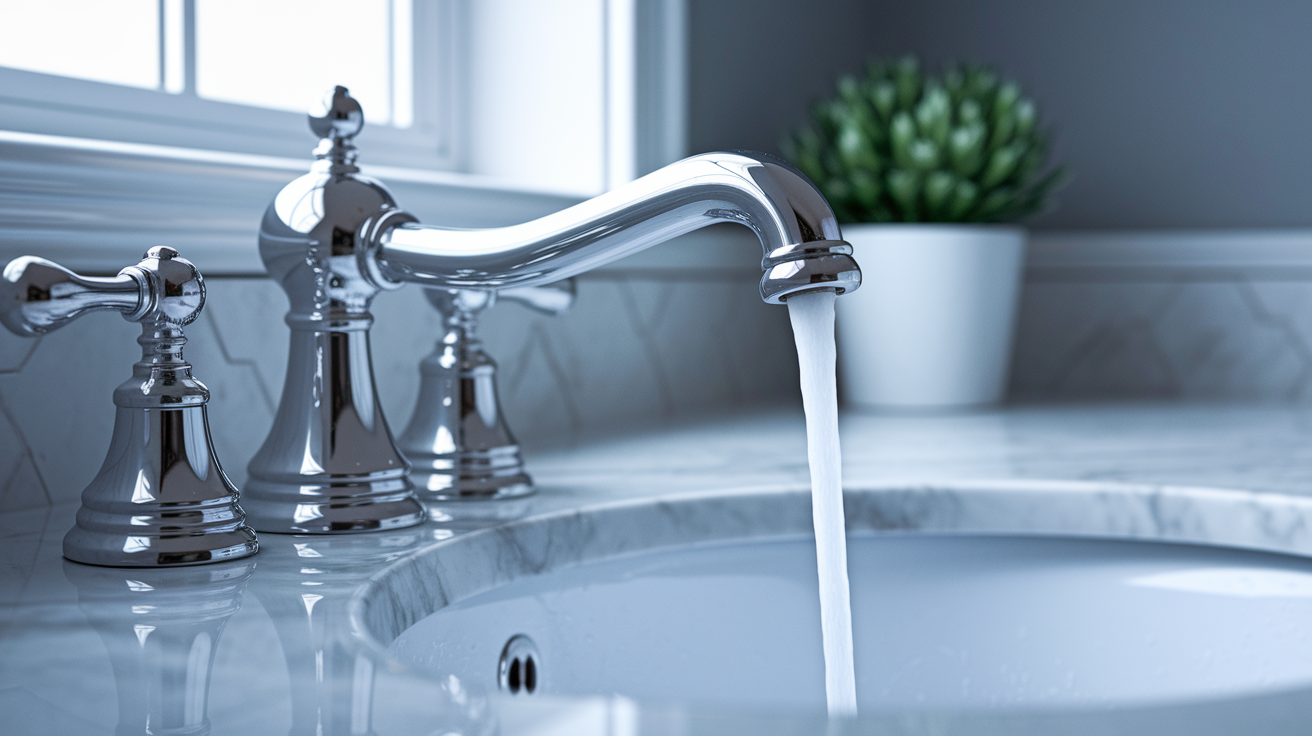
The real test happens after the flush, not during the fizzing. Turn on the tap at a normal, moderate rate and watch what the water does. If it drains continuously without pooling around the opening, that’s a genuinely good sign.
Beyond that, look for a few other clues. The standing water level should drop noticeably. Drainage should speed up compared to before you started. You should hear less gurgling during normal use, like when you’re washing dishes or brushing your teeth. And if odor was part of the problem, caused by food or other organic buildup, that smell should fade too. Remember, the fizzing itself tells you nothing about success. It’s just the ingredients doing their chemistry.
On the flip side, some signs tell you the clog is still there. If drainage speed hasn’t changed, if water keeps pooling the same way it did before, if it backs up into the other side of a double basin, or if the sink fails that moderate-flow tap test, the blockage hasn’t cleared. At that point, you can attempt one complete repeat of the treatment, but only one. If the drain is still restricted after that second try, it’s time to stop reaching for the baking soda and move on to mechanical troubleshooting instead.
What to Do After One Repeat Fails
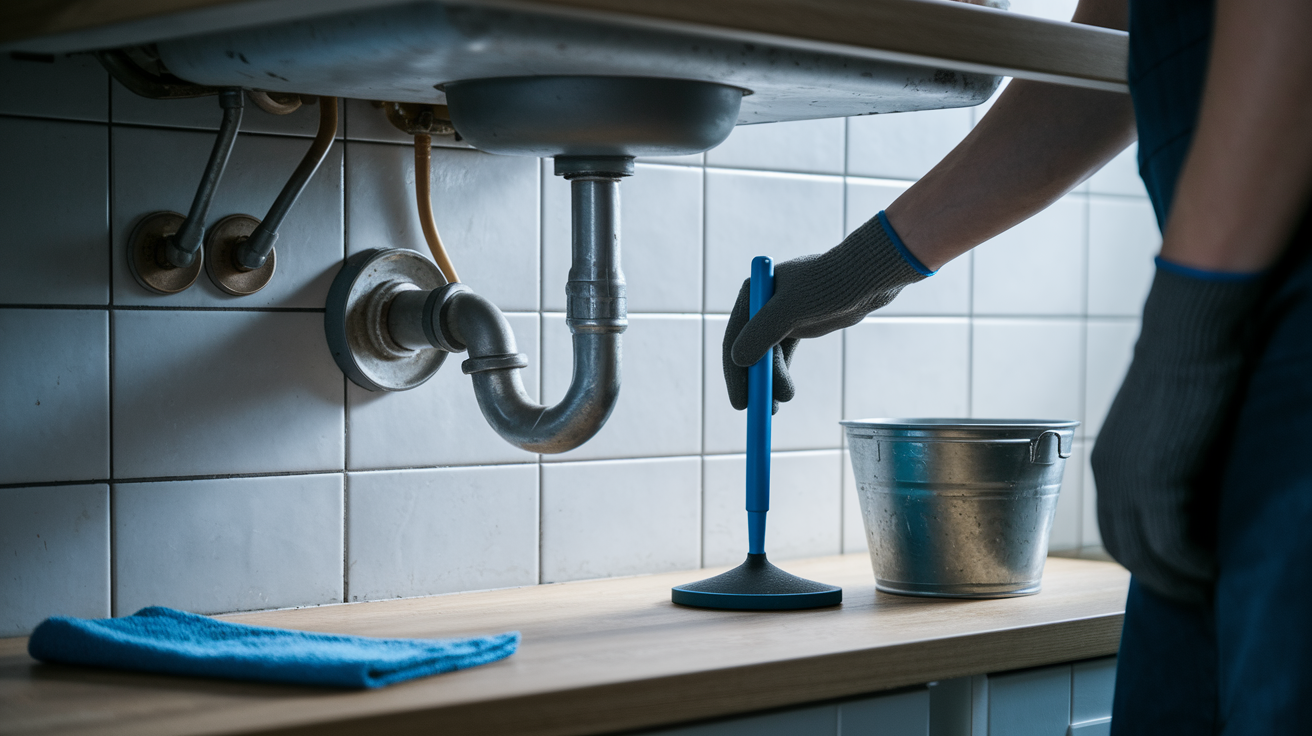
If you’ve done the full treatment once and repeated it once more with no real improvement, stop there. Running more baking soda and vinegar through the pipe at this point is mostly just wasted time and wasted ingredients. The clog is telling you it needs something physical to move it, not more chemistry.
Use a Sink Plunger
First, remove enough standing water that you can work without it splashing everywhere, but leave just enough to cover the plunger cup. That water layer is what creates the seal you need for suction to work.
If you have a double sink, seal off the second basin with a wet rag or stopper, and do the same for any overflow opening. Position a flat-bottomed sink plunger directly over the clogged drain and give it several firm, controlled plunges. Not wild thrashing, just steady pressure down and a quick pull up.
One important safety boundary here. Do not plunge if there’s any bleach or commercial drain cleaner residue in that drain. The pressure from plunging can cause that liquid to splash back up onto your skin or into your eyes, and that’s a real hazard, not a minor inconvenience.
Clean the P-Trap
The P-trap is that curved pipe under your sink, and it’s basically a built-in collection spot for grease
Final Words
Remove standing water, put on gloves and eye protection, then pour 1 cup baking soda into the drain. Slowly add 1 cup white distilled vinegar and cover the opening.
Wait 15–20 minutes, then flush with 1–2 liters of very hot water (avoid boiling unless your pipes can take it). Bubbling shows the reaction; real success is faster drainage.
If it’s still slow, repeat once, then try a plunger, clean the P-trap, or snake the line. How to unclog a kitchen sink using baking soda and vinegar is a cheap, safe first step that often restores normal flow.
FAQ
Q: What should you not clean with baking soda?
A: You should not clean natural stone (marble, granite), aluminum, nonstick pans, polished metals, wood finishes, painted surfaces, or skin with baking soda because its mild abrasiveness can dull or etch those surfaces.
Q: Can I use apple cider vinegar to clean with baking soda? Can I mix Dawn and vinegar and baking soda together?
A: Using apple cider vinegar with baking soda will work, but 1 cup white distilled vinegar is preferred for drains; a little Dawn dish soap can help cut grease—never mix any of this with bleach or commercial drain cleaners.
Q: How do I unclog a sink?
A: To unclog a sink, remove standing water and debris, pour 1 cup baking soda, add 1 cup white vinegar, cover 15–20 minutes, flush with 1–2 litres very hot (not boiling) water, then run hot tap to test.
More from Politics
 Featured
How to Reset a GFCI Outlet Safely at Home
 DIY Repairs
How to Replace a Leaky Bathroom Faucet Cartridge Easily
 Home Maintenance
How to Adjust Door Hinges to Fix a Sagging Door
 Tools Materials